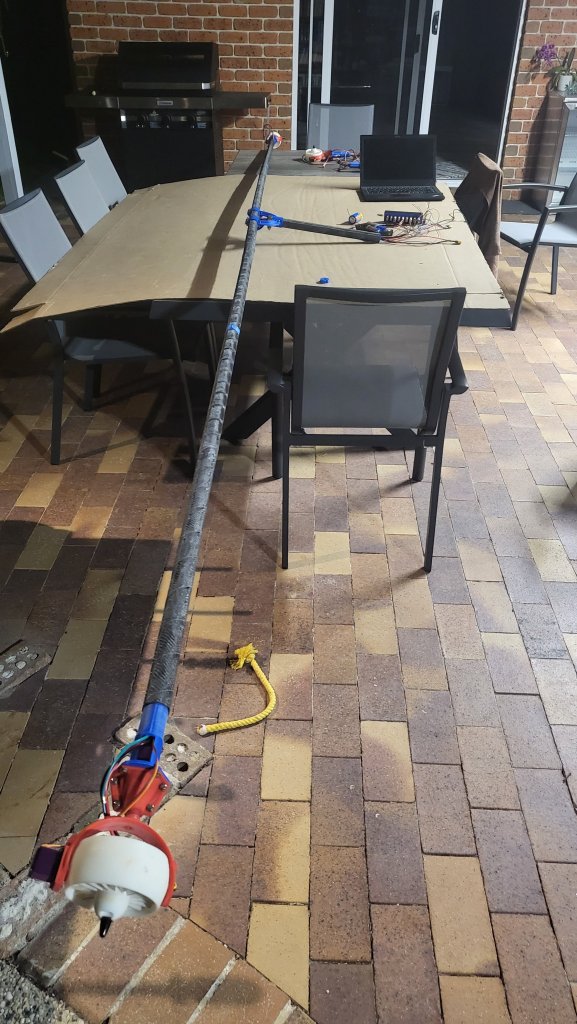
Wiring – gimbals II

In continuation of the structure wiring as started here, we made some substantial progress over the weekend.

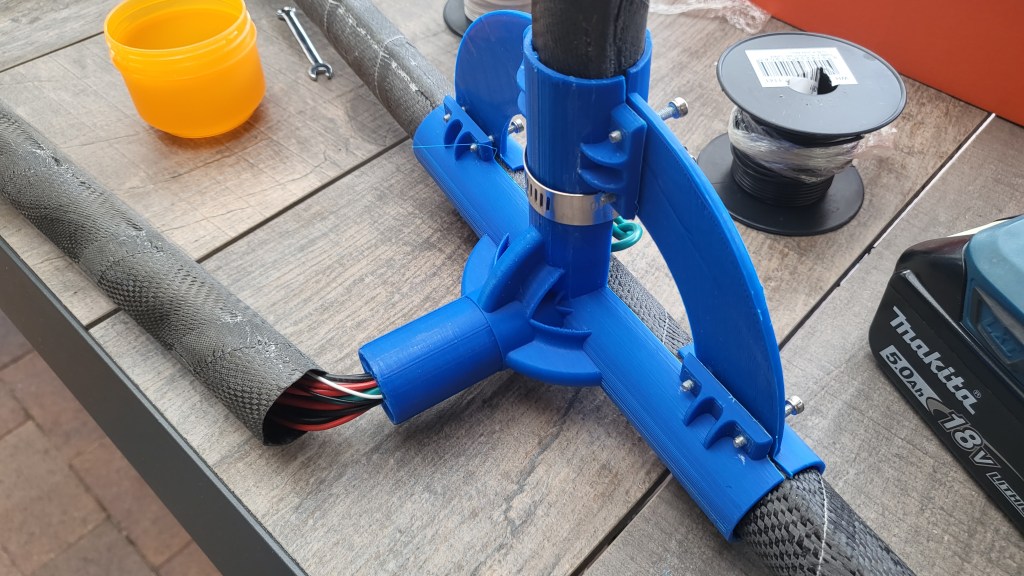
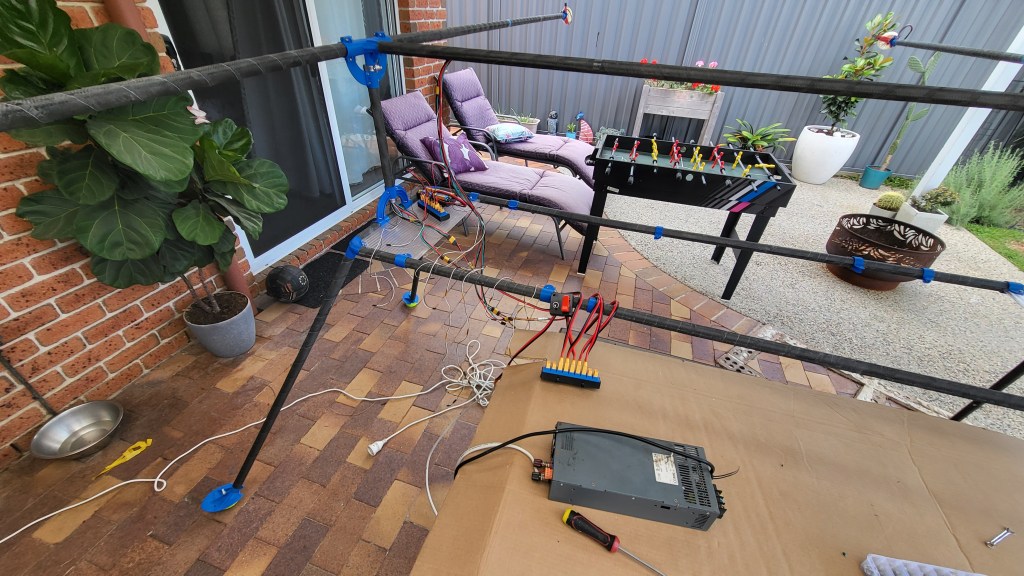
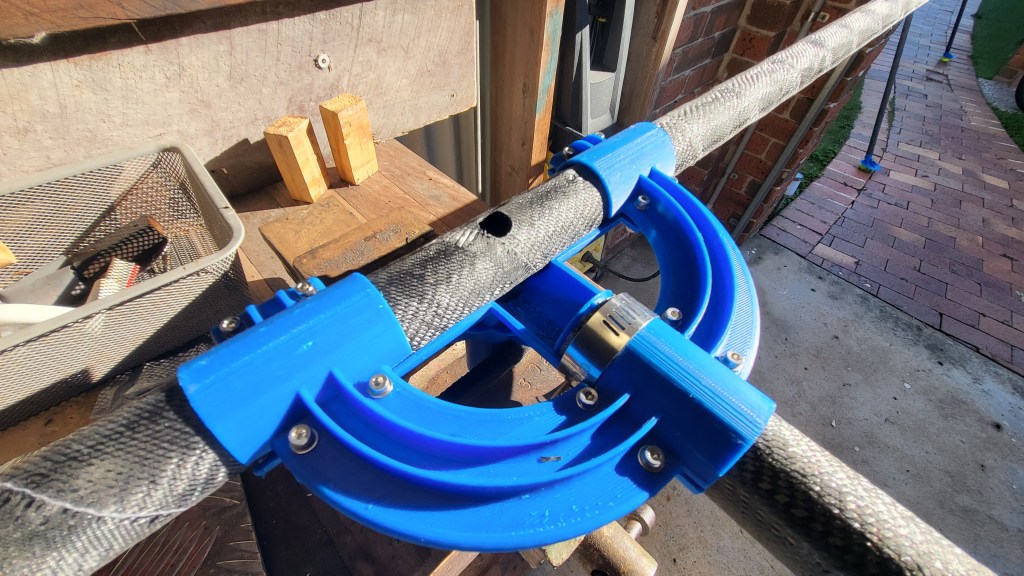
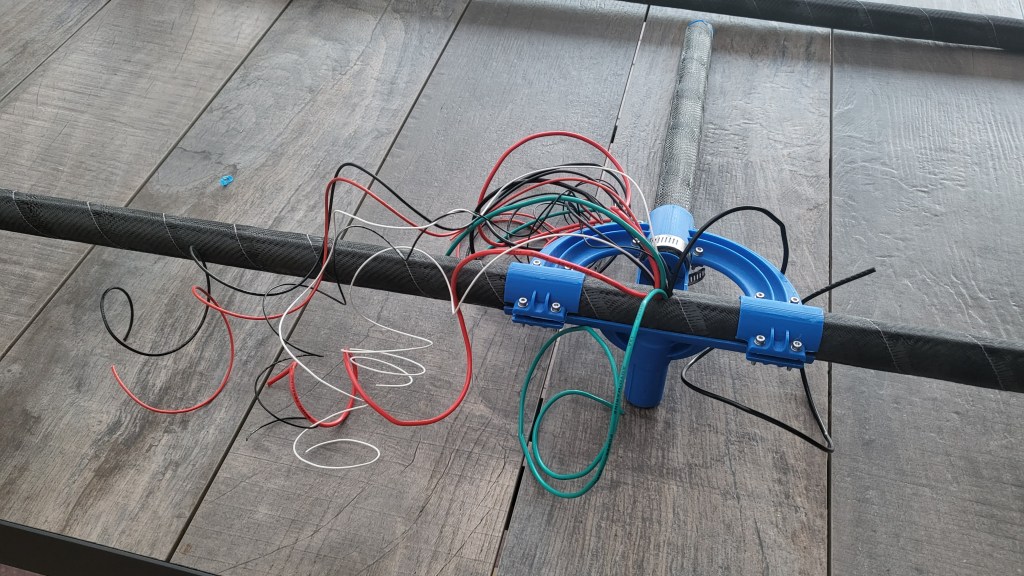
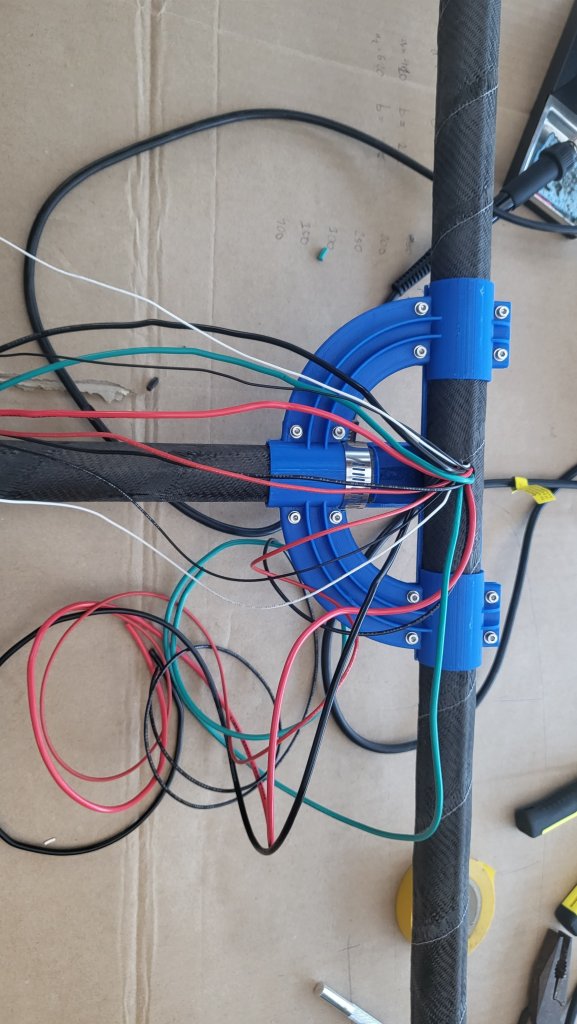
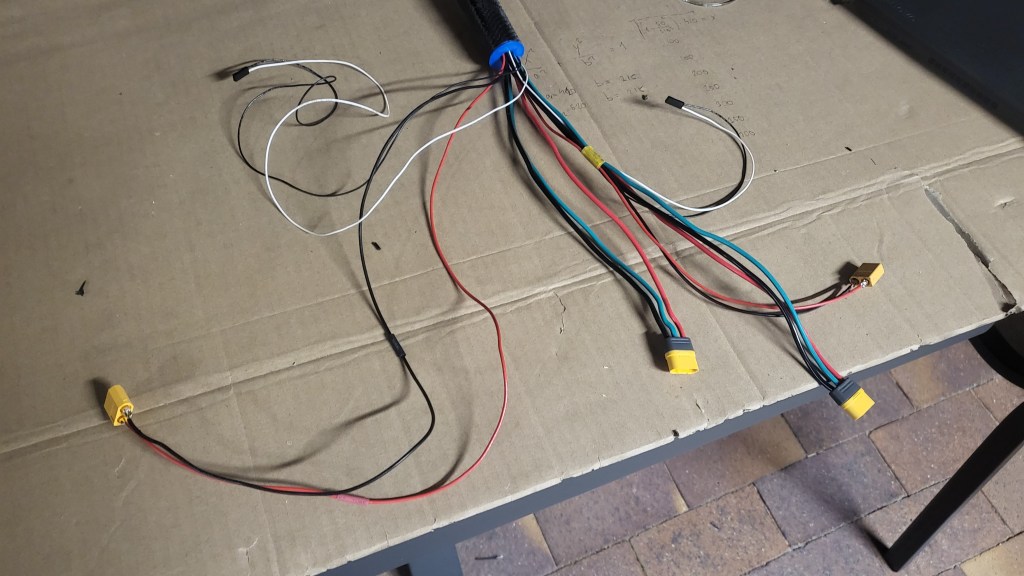
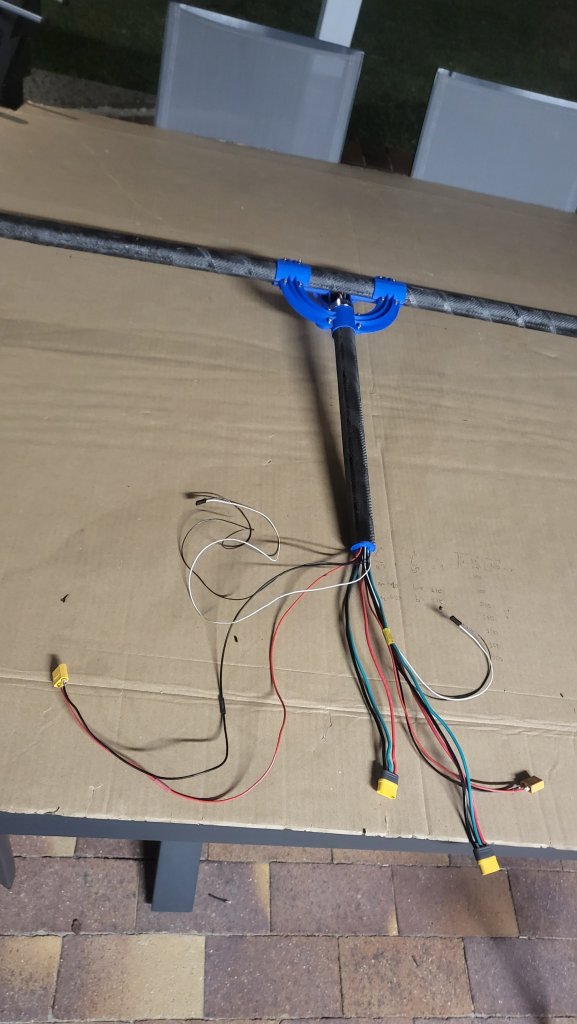
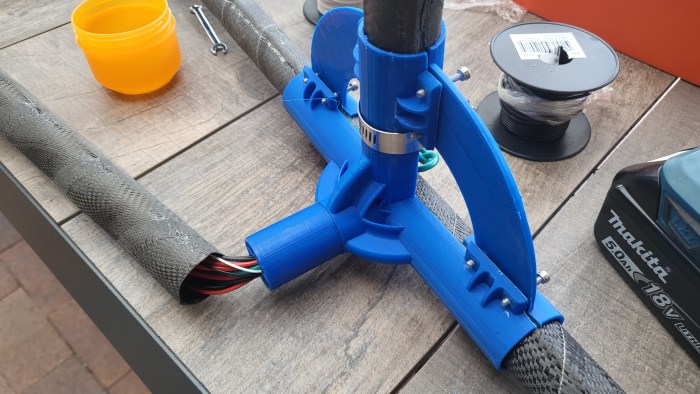
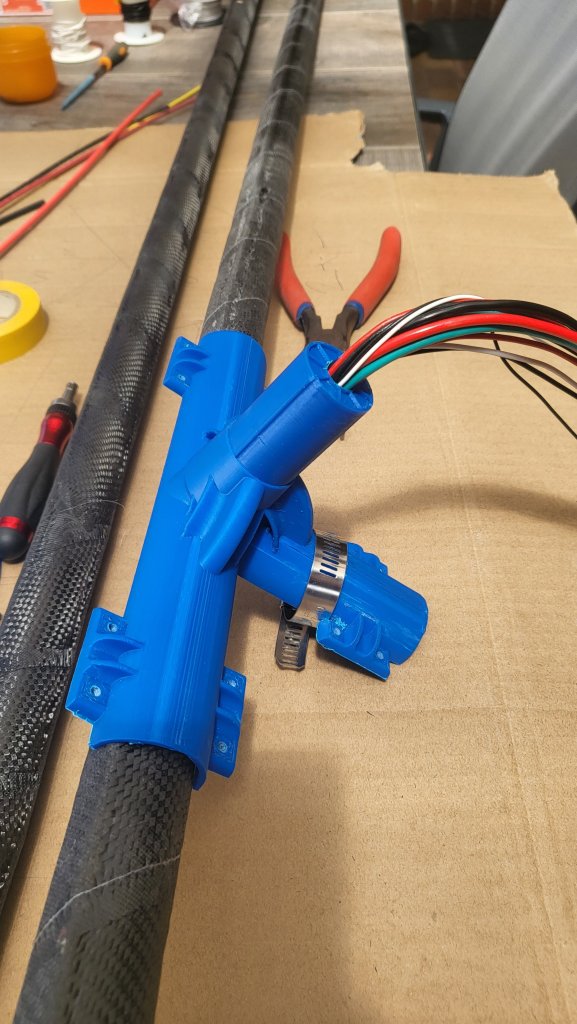
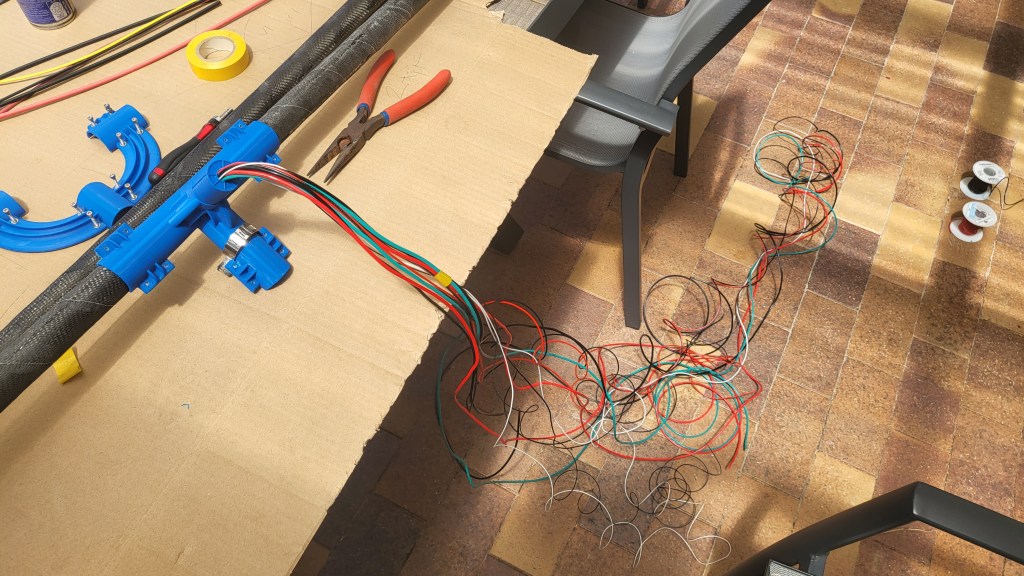
As you can see on pictures below, the rear beam wiring is now nicely done and all cables are wired through the upper connecting tube to the front where batteries and controller sits.
We also tried to do some testing to see it all working so Seb attached his RC controller, while all power lines were connected (6V battery set for servos and 2kW 25V PSU for motors).
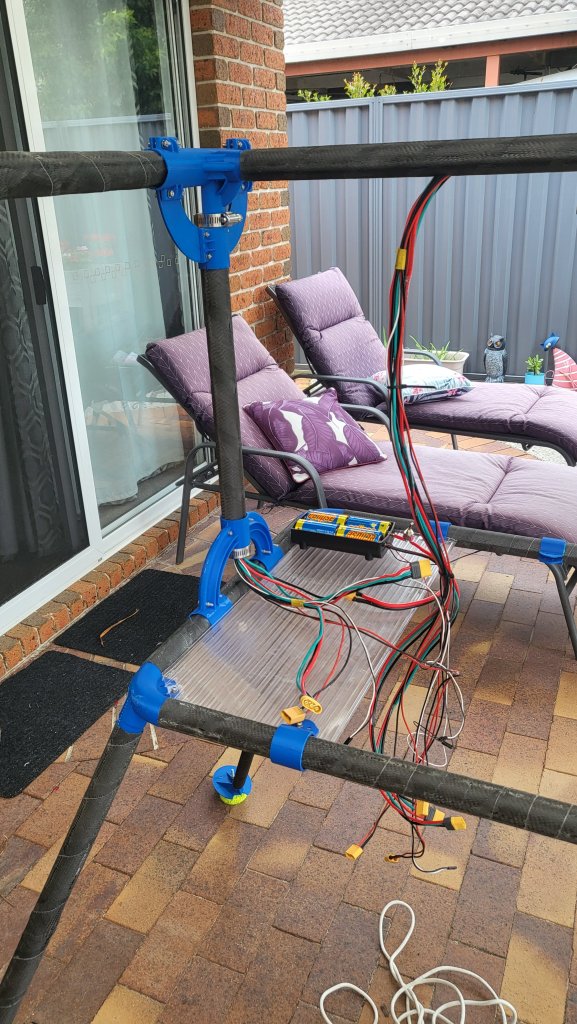
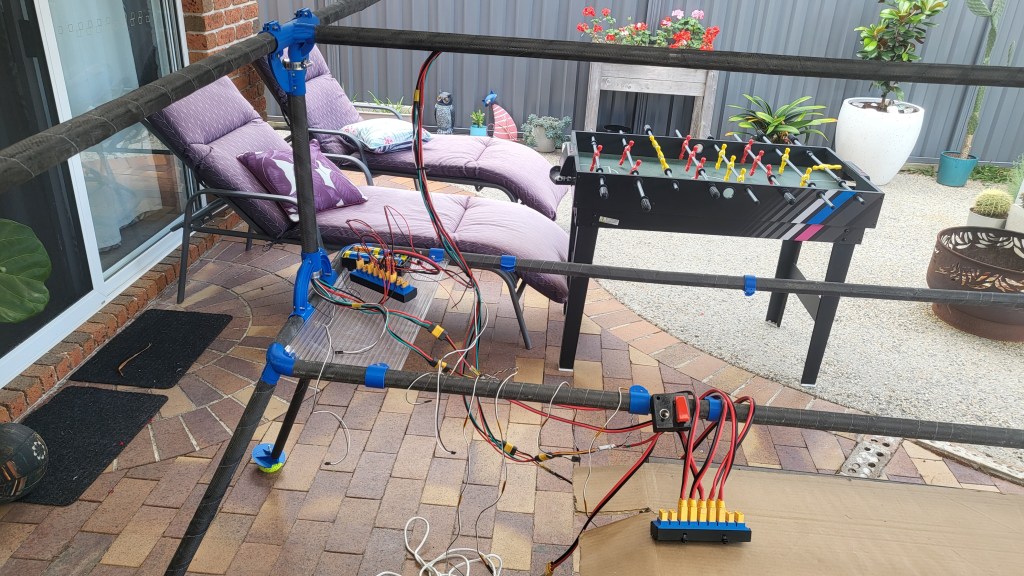
While it looks wild, it did the job! Video below demonstrates our first RC controlled gimbal test (10% power only)!

… then it somehow stopped working so we did another one with lower powers, but that wasn’t that nice.

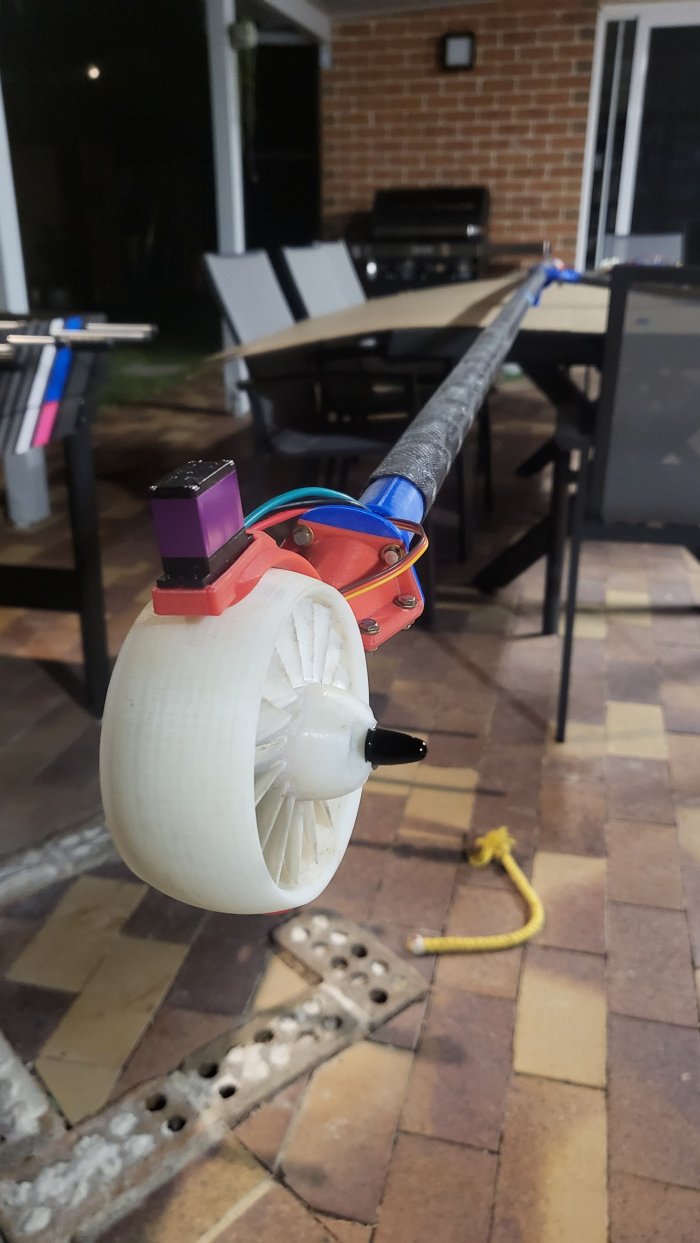
Also did a video showing all gimbols operating.
Wiring – gimbals I

Having the main structure ready, we are progressing to the next stage – the wiring. Honestly, I thought that it will be much easier, but all that task spread into multiple tiny sub-projects and finally took couple weeks just to get us here.

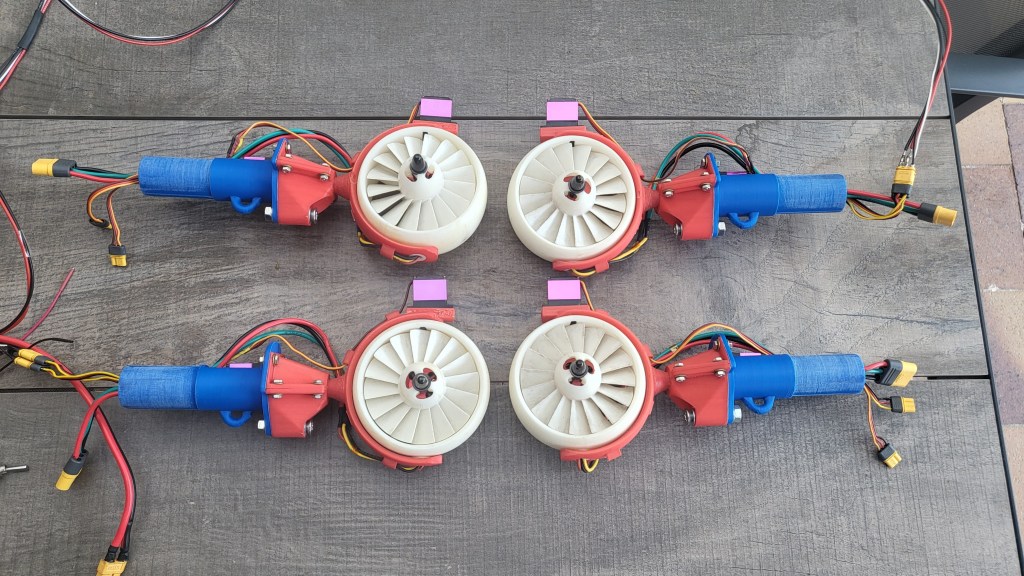
Gimbals rewiring

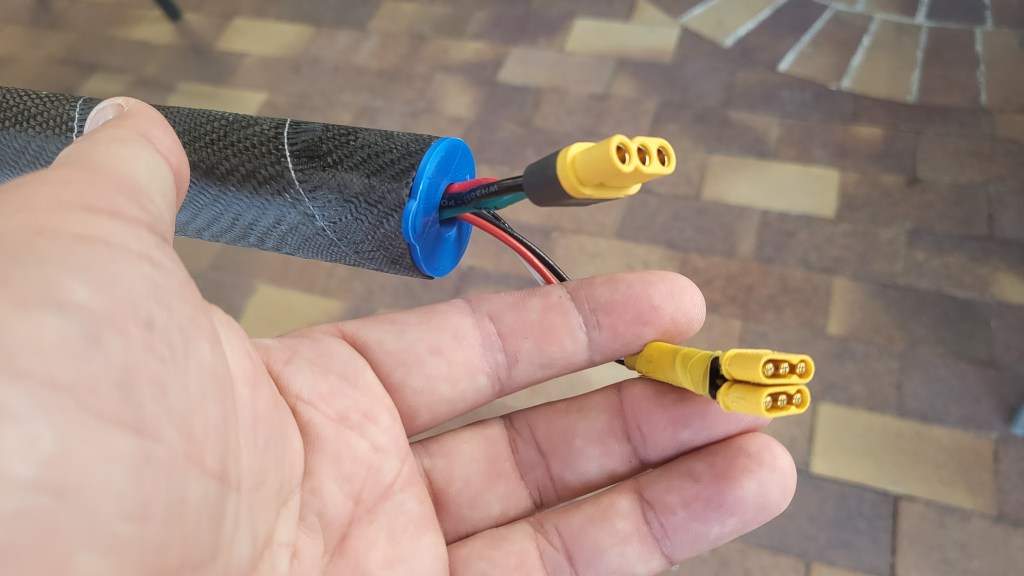
First – gimbal connectors needed to be moved so they can fit into the main tube. That needed extension of all cables and connectors re-soldering.

All 4 gimbals re-wiring finished.

Front truss cabling

Next stage was to run cables through the front truss tube and down to gondola. How easy it sounds, it ended up being much more complicated than that.

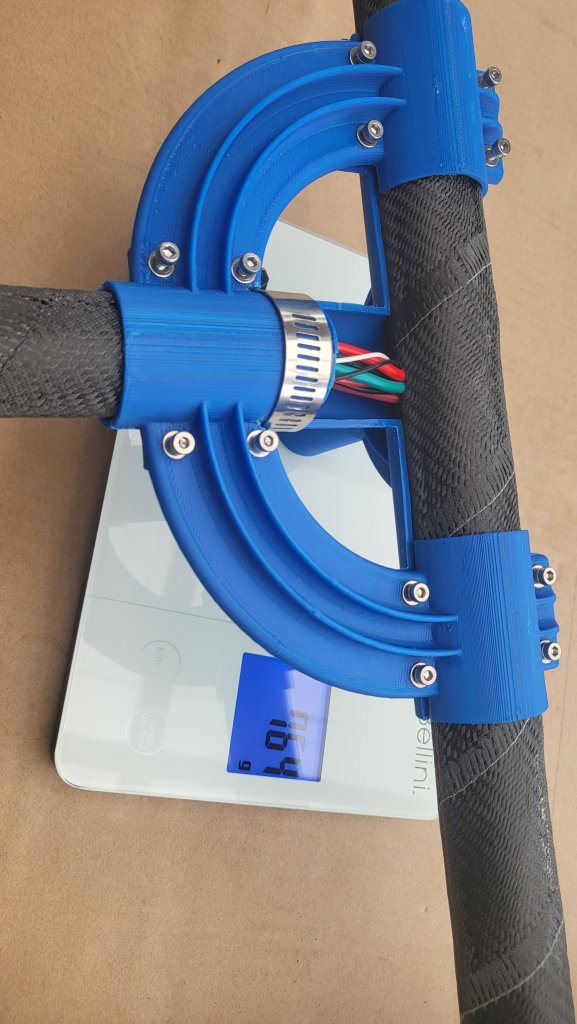
I am not joking – what you are looking at is practically 14 cables run through a single hole:

  • 3 x motor power cables (16AWG – 15A)
  • 2 x gimbal servo power cables (22 AWG – 7A)
  • 2 x gimbal servo signal cables (??)

So seven cables as above – twice for each side -> 14! As you can see it worked out that whole that tube now weighs 764 grams, but that was expected (we have 2kgs of buoyancy reserved for cables only).

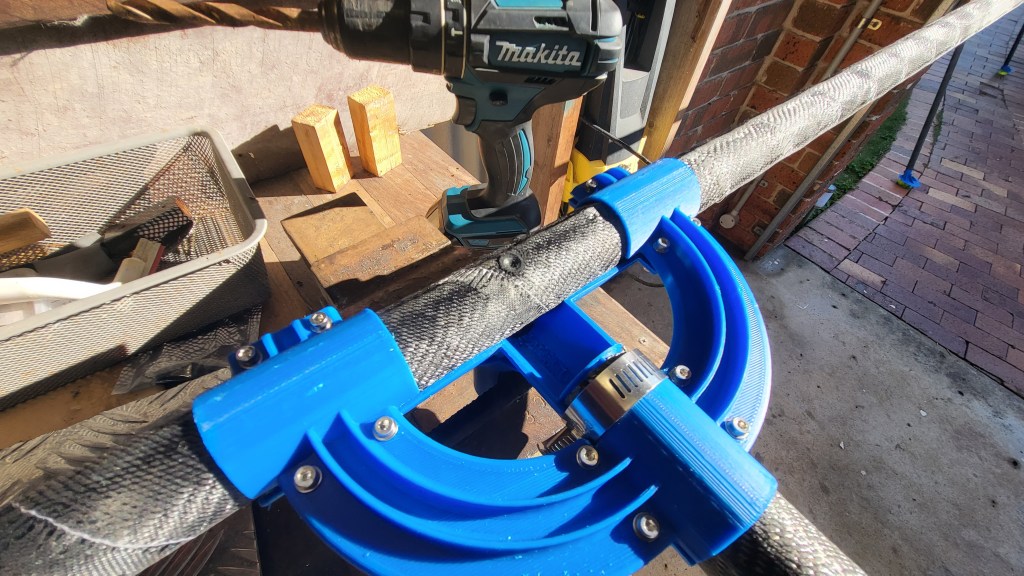
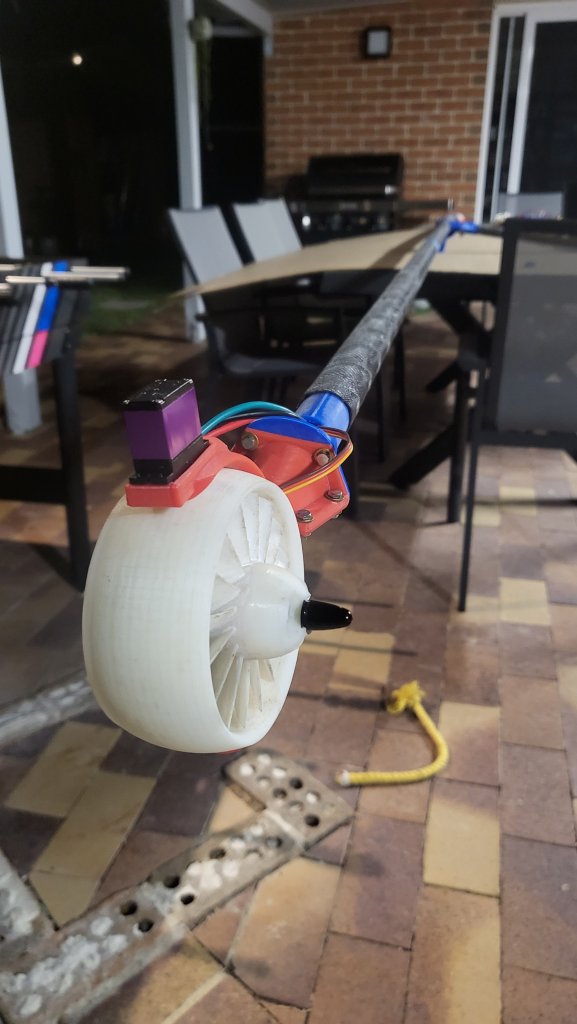
Finally some testing with gimbals mounted.

And I took a video as well.

Looks pretty promising, now the second tube + maneuvering thrusters & main EDFs intakes, but for those later ones I plan to lead cables just around tubes, so that should be easy.