As per our Phase II planning we reached moment where some material decisions needed to be done also to prevent Phase I material fiasco.
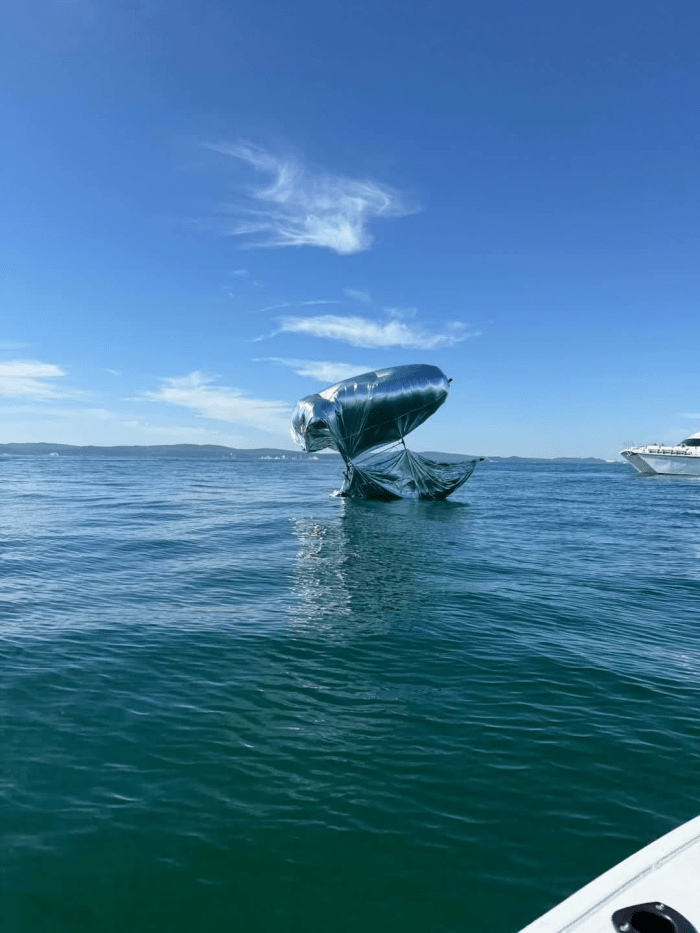
One of the main ones was the envelope material. This was not really a glamorous design decision, but it was one of those practical decisions where the rest of the project starts depending on it. We needed something thin, flexible, weldable, reasonably strong, and available in a quantity that would allow us to do more than just a few small test coupons.
For Phase II, the material direction settled around aliphatic polyether TPU film. The attraction was mostly practical. It is a flexible film, it can be heat welded, and the supplier was able to discuss a custom thin-gauge production run.
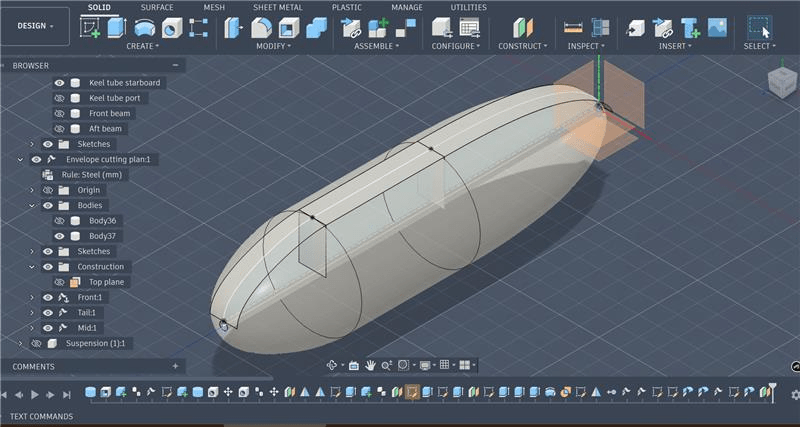
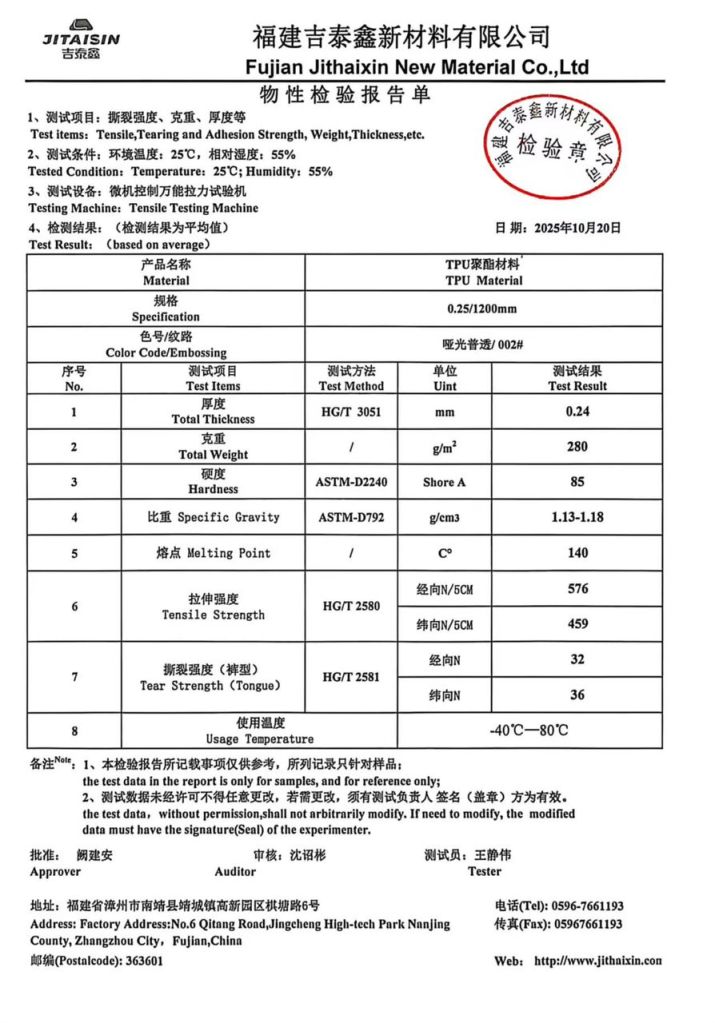
We also had some physical property information from the supplier, even though that later needed to be treated carefully because the test sheet was for a thicker reference sample, not our final delivered material.
The first number we were working with was 0.15 mm thickness. That already sounded thin, but when looking at the full envelope mass, it became clear that even small changes in thickness mattered. A reduction of 10 or 20 microns across hundreds of square metres is not a detail. It becomes kilograms. For a small hydrogen airship demonstrator, kilograms quickly turn into buoyancy margin, payload margin, and general practicality.
So some calculations were needed – For the 19 m bi-lobe Phase II, we tried to go with the 130 micron choice and the ~711 m^2 material figure came from two separate steps.
First, thickness:
- we used the supplier’s 0.24 mm / 280 g/m^2 sheet as a baseline
- then scaled it down to 0.13 mm
- so projected areal density became:
gsm_0.13 = 280 * (0.13 / 0.24) = 151.67 g/m^2
Second, total material area:
- the design sheet added up the main film contributors, not just outer skin
Outer skin = 423.61 m^2 Seam overlap allowance = 22.80 m^2 Ballonet material = 60.00 m^2 Inner tube wraps = 47.75 m^2 Cross-section partitions = 157.08 m^2 Total = 711.25 m^2
Then total TPU mass estimate was:
mass = 711.25 * 0.15167 ≈ 107.9 kg
So the rough logic was:
- choose 0.13 mm to keep envelope mass down
- estimate total required film area at about 711 m^2
- which corresponds to about 519 m of 1.37 m wide material before extra contingency
The much larger 1000 m plus order was basically a procurement buffer beyond the bare first-pass geometric requirement.
So the discussion moved toward whether the supplier could make 0.13 mm instead. On 26 February 2026, the working reference was still aliphatic polyether TPU, silver colour, 0.15 mm thickness, 1370 mm width. I then asked whether 0.13 mm or 0.14 mm could be made. By 2 March, the request had become more specific: aliphatic polyether TPU, silver, 0.13 mm, 1370 mm wide. On 3 March, the supplier confirmed they could make the 0.13 mm film.
Later, the order moved beyond the planning PI and into actual production. On 25 March 2026, the supplier reported that they had produced 230.4 kg. This was 30.4 kg more than the earlier working quantity. That created extra cost for both material and shipping. The supplier described the difference as USD 162.50 extra material cost and USD 98 extra shipping cost, so USD 260.50 additional total.
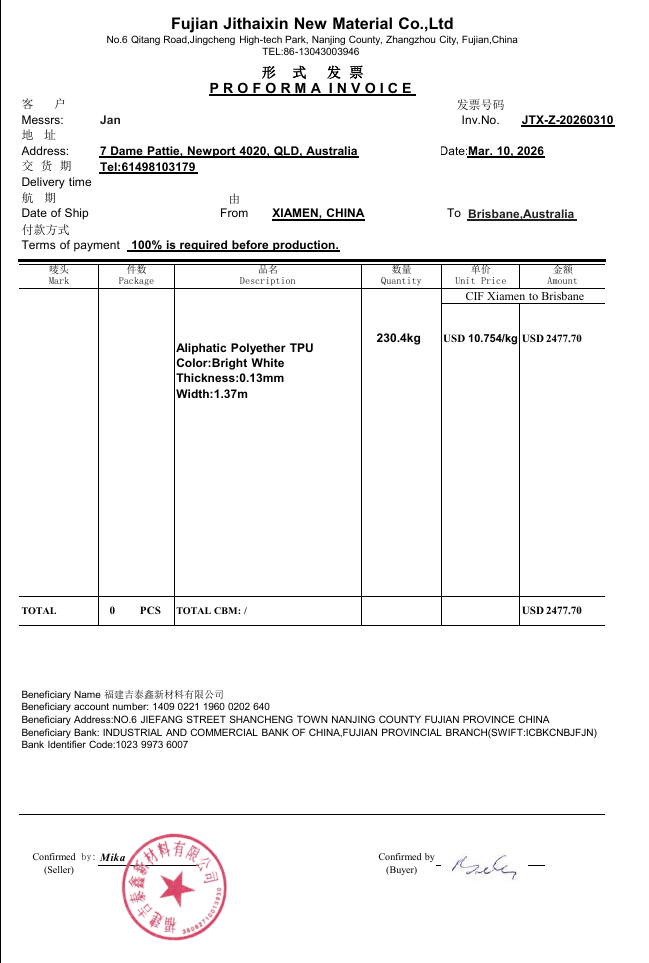
The later formal paperwork used invoice or contract number JTX-Jan-20260310. At that stage the description had also changed from the earlier “silver” planning language to “bright white”. The documented final quantity was 230.4 kg net, 254 kg gross, packed as 6 rolls. The unit price was USD 10.754 per kg, with a total invoice value of USD 2,477.70 under CIF terms.
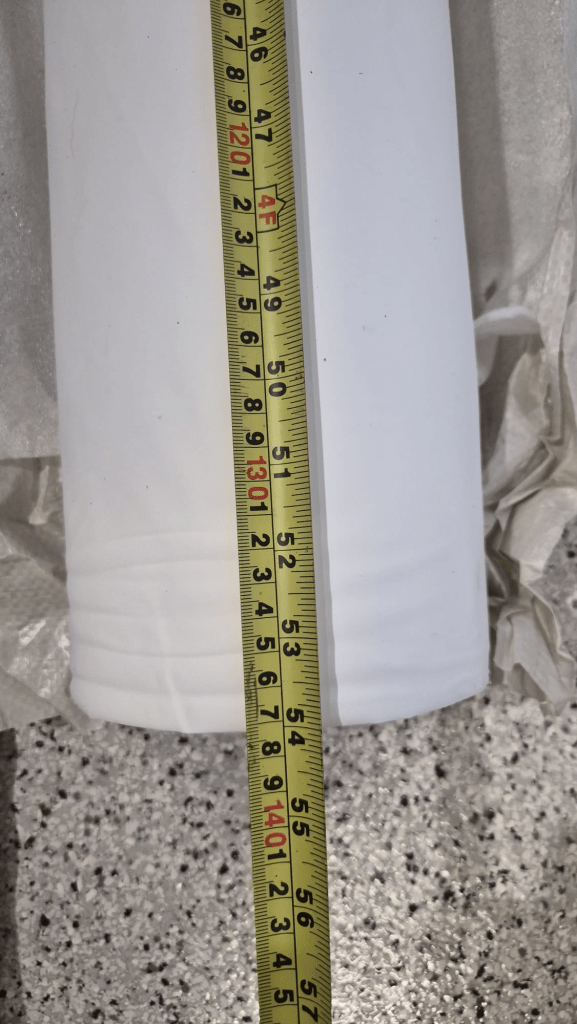
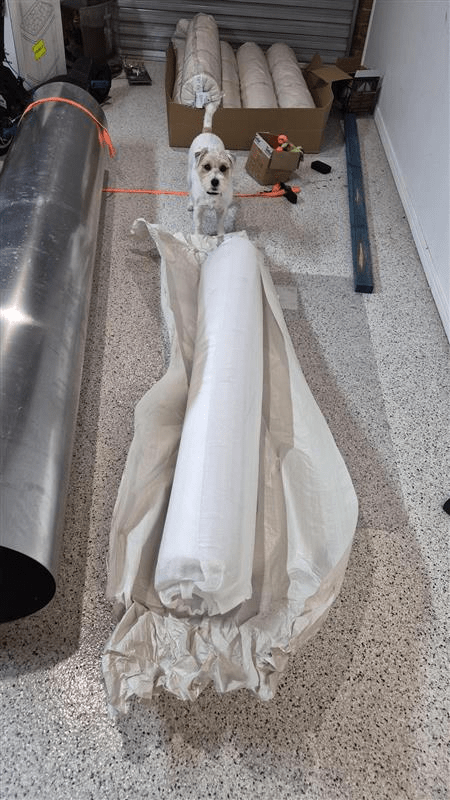
After delivery, I measured the roll width and confirmed it as 1370 mm. Using the confirmed 1.37 m width and the provisional scaled areal weight of 151.67 g/m², 230.4 kg back-calculates to about 1108 m of film. That is roughly 108 m more than the original 1000 m planning assumption.
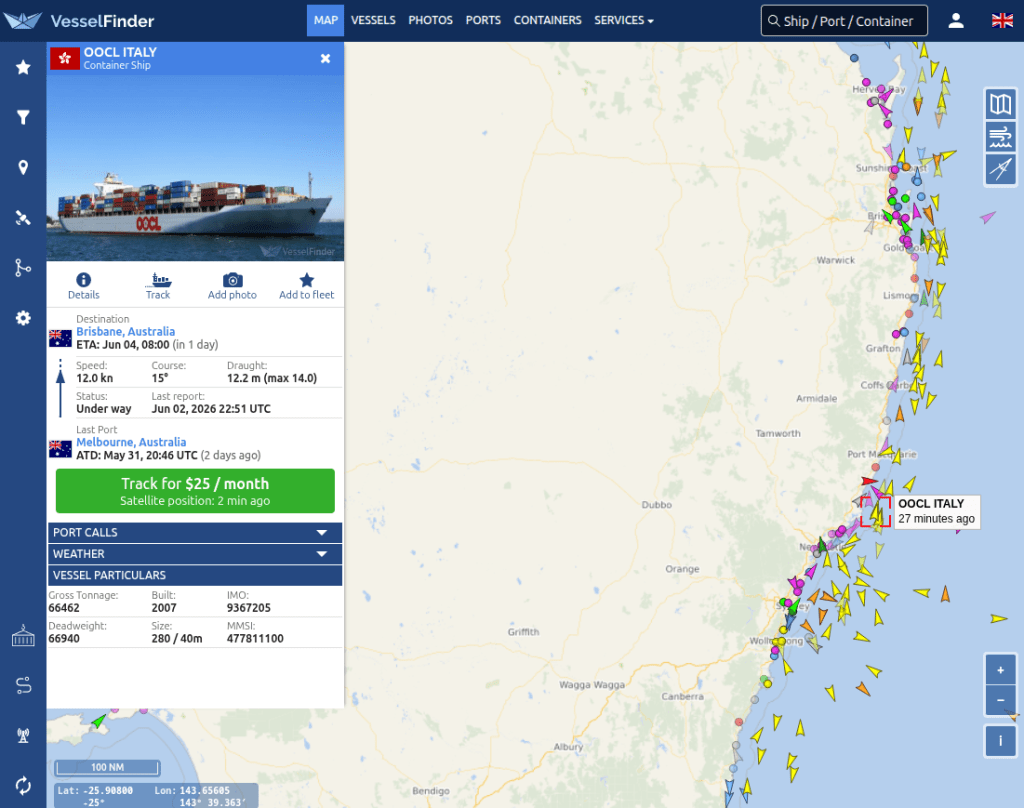
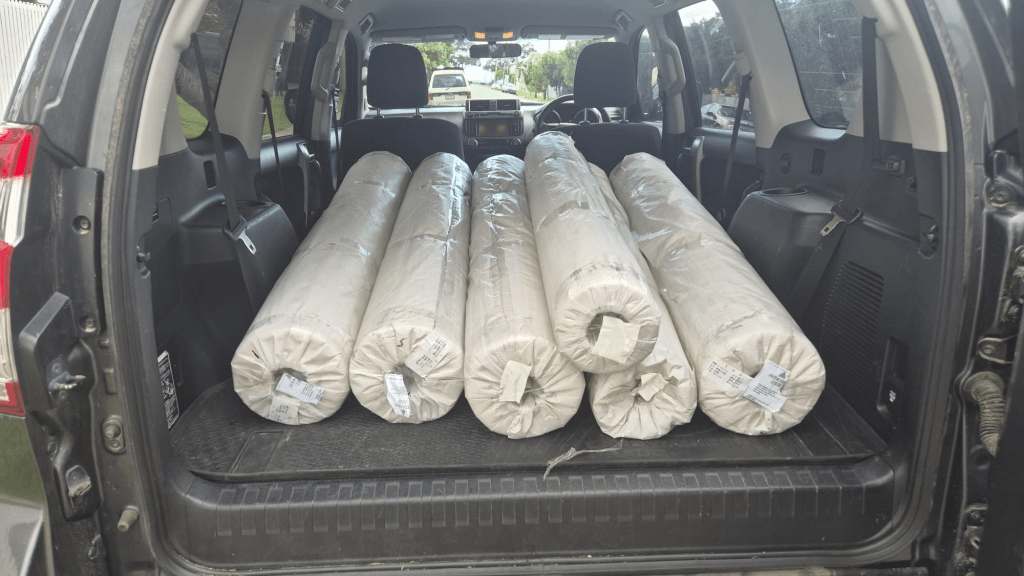
The shipping and import trail is now also documented. The goods were shipped as 6 rolls, with a net weight of 230.4 kg and gross weight of 254 kg. The shipment used container TRIU6685912 and seal M8700787. The vessel was OOCL ITALY, voyage 153S, with departure on 5 April 2026 and Brisbane arrival around 27 April 2026. The certificate of origin was issued under the China-Australia Free Trade Agreement form and marked as issued retrospectively. The customs material line described the goods as polyurethane TPU film, 100% TPU, with the process listed as calendaring.
There was also a final Australian-side import invoice from Airwave. This is a useful addition to the story because the supplier invoice did not represent the whole practical cost of getting material into hand.
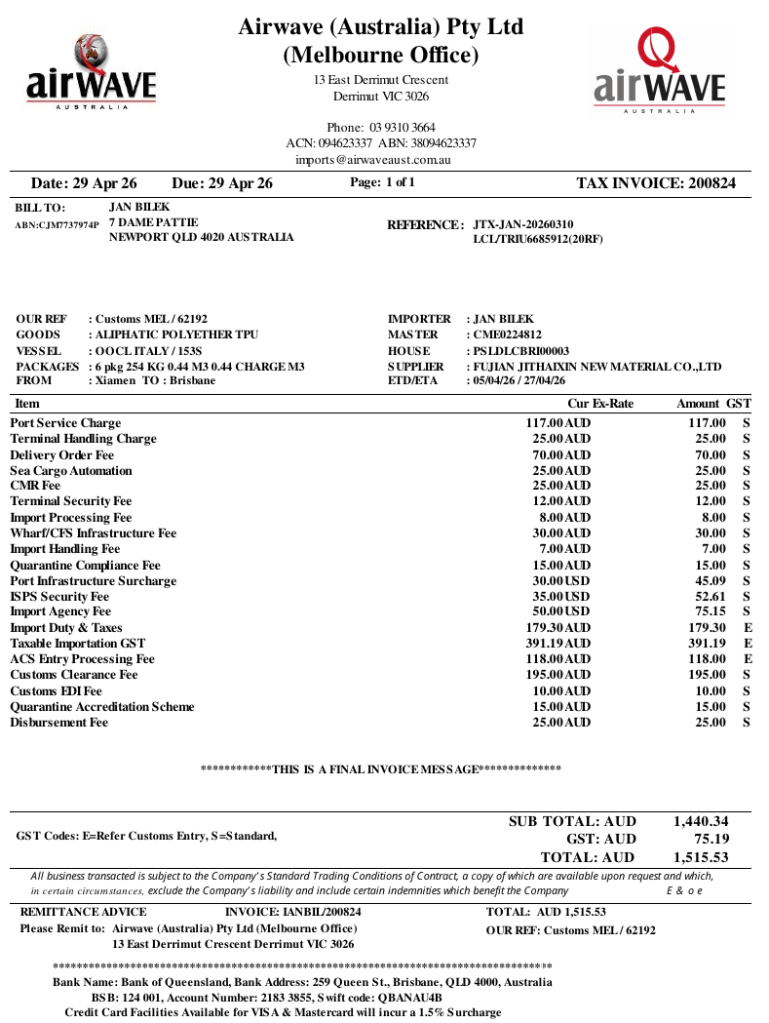
The Airwave invoice was dated 29 April 2026 and referenced the same shipment: aliphatic polyether TPU, 6 packages, 254 kg gross, 0.44 m³, OOCL ITALY / 153S, customs reference MEL / 62192, and JTX-JAN-20260310. It included port service charges, terminal handling, delivery order fee, sea cargo automation, security fees, customs clearance, quarantine fees, import processing, duty/taxes, and import GST.
The total Airwave invoice was AUD 1,515.53.
So the cleaner cost picture is now:
- The supplier-side invoice was USD 2,477.70 for 230.4 kg of TPU film.
- The Australian-side import bill was AUD 1,515.53.
Using the exchange rate implied by the Airwave USD charge conversions, the supplier invoice is roughly AUD 3,724. That puts the broad landed cash outlay at about AUD 5,240, before bank fees or any later GST recovery.
Spread over the 230.4 kg delivered lot, that is roughly AUD 22.74 per kg.
Spread over the back-calculated 1108 m of material, that is roughly AUD 4.73 per metre.
This does not make the material expensive in an aerospace sense, but it does show the usual small-project reality. The material price is only part of the real cost. Once freight, port charges, customs handling, quarantine, processing fees, duty/taxes, and GST are included, the practical landed cost is meaningfully higher than the supplier invoice alone.
For now, the Phase II material decision has moved from a theoretical material choice to a real delivered stock of TPU film. The planning target was around 208 kg and 1000 m. The actual documented lot is 230.4 kg, approximately 1108 m based on the confirmed 1370 mm roll width and provisional scaled areal weight. The final supplier invoice value was USD 2,477.70, and the Australian import invoice added AUD 1,515.53.
The next step is not more paperwork. The next step is to weigh sample areas, run welding tests, leak tests, and creep tests, and then start treating the material as an engineering input rather than a procurement story.
At this stage, the honest position is simple: we have the material, the roll width is now confirmed, the evidence trail is good enough to understand what was ordered and delivered, and the remaining unknowns are now testable.

 H2Use
H2Use 
No to mě poser
LikeLike
What is the Hydrogen permeability of this new material?
Peter Garwood
http://www.bbrclub.org/ http://www.bbrclub.org
Balloon Barrage Reunion Club
Let up! Haul Down!
Balloon Barrage Historian, Photo / Video Journalist, Radio / Television Contributor.
Co-Author : – âThe Belgia Incident â Revisitedâ
Telephone 07412 869027
LikeLike
Hi Peter, Good question!
bracketing TPU with published polyurethane H2 permeability of 6.63-60.6 x 10^-16 mol/(m*s*Pa) at room temperature from the CSA hydrogen-liners review. So for the assumptions we used:
outer skin area: 423.61 m^2
film thickness: 130 micron
hydrogen fill: 547 m^3
overpressure: 500 Pa
the membrane-only diffusion estimate for our Phase II is then about:
0.46 to 4.26 m^3/day of hydrogen, expressed as an equivalent standard/normal gas volume
or about 0.038 to 0.351 kg/day
LikeLike
Hello Jan, That sounds fine. Ever considered a ballonet design?
Peter Garwood
http://www.bbrclub.org/ http://www.bbrclub.org
Balloon Barrage Reunion Club
Let up! Haul Down!
Balloon Barrage Historian, Photo / Video Journalist, Radio / Television Contributor.
Co-Author : – âThe Belgia Incident â Revisitedâ
Telephone 07412 869027
LikeLike
Hi Peter, yes, ballonets have to be in there & those are already included in our design. There will be two ballonet-gas-bags stretched between those keels and central gondola (inside main envelopes, accounting for approx 5% of total gas volume. 🙂
LikeLike
Do you have any work on the risk of static build up in this new material? Would you be earthing the balloon prior to flight? Is there any work showing how it might build up static as it moves through dry air?
Peter Garwood
http://www.bbrclub.org/ http://www.bbrclub.org
Balloon Barrage Reunion Club
Let up! Haul Down!
Balloon Barrage Historian, Photo / Video Journalist, Radio / Television Contributor.
Co-Author : – âThe Belgia Incident â Revisitedâ
Telephone 07412 869027
LikeLike
Thanks Peter, that’s a really good point, and one we should treat seriously.
We haven’t completed static build-up testing on this TPU yet, so I don’t want to pretend we have an answer already. Your comment has prompted us to add it directly into the Phase II material test plan and risk register.
The next step is to check whether the film builds charge during handling, unrolling, airflow, and dry-air movement, and to define a proper bonding/earthing procedure before any hydrogen fill or flight release. We’re also looking at the right measurement method, as a normal multimeter won’t really answer this on an insulating film; we’ll likely need a non-contact electrostatic field meter or similar.
So: thank you. This is exactly the kind of practical historical/operational question that helps stop us missing something important before the test article gets bigger.
LikeLike
Ballonet designs fair much better that basic pressure balloons where shape is maintained by complicated elastic cords. Although some ballonet designs benefit from a set of internal rigging lines to maintain the critical shape. Not sure you will be needing any internal rigging!
LikeLike